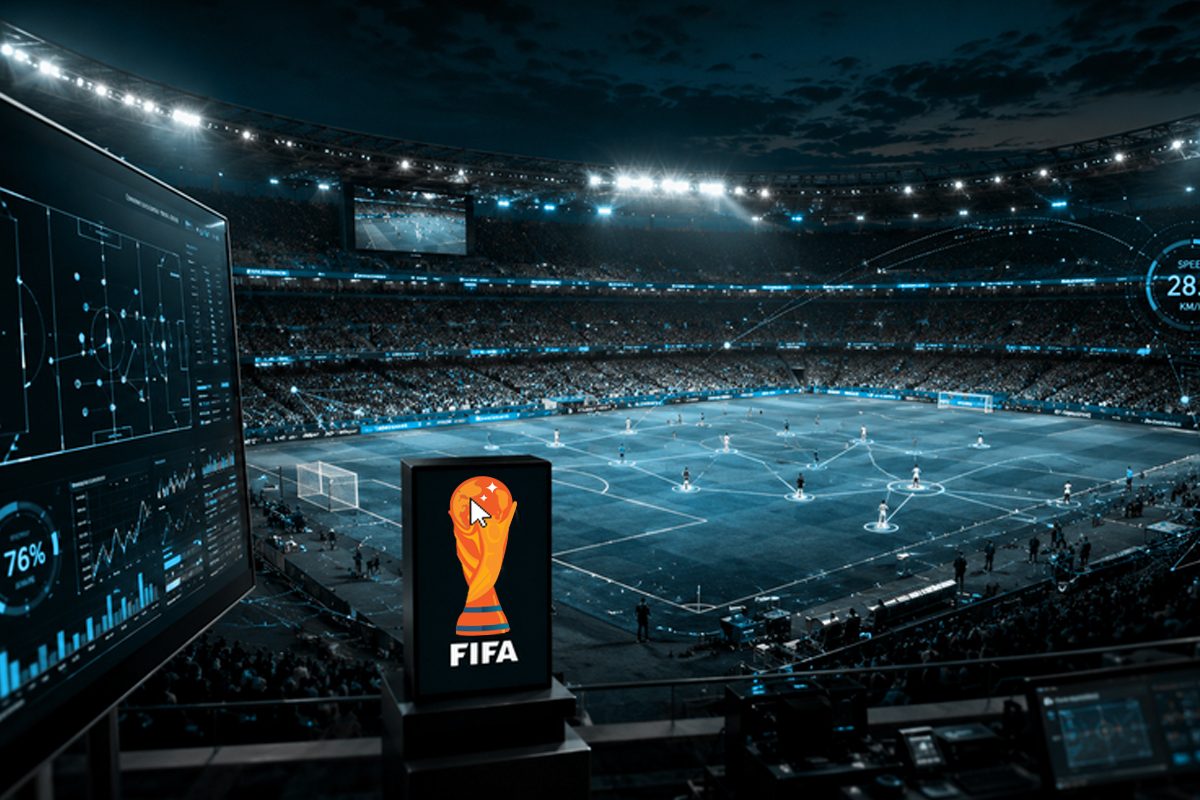
The FIFA World Cup has always served as a showcase for football’s best players. In 2026, it will also serve as a demonstration of how deeply technology has become embedded in modern sport.
The tournament spans 16 host cities across Canada, Mexico, and the United States and expands the format to 48 national teams competing across 104 matches. Broadcast operations, security, transportation, officiating, communications infrastructure, and fan engagement now generate enormous volumes of data before a ball is ever kicked. Technology companies, telecommunications providers, broadcasters, and software developers have become as essential to the event’s success as stadium operators and tournament organizers.
Many of the systems debuting at World Cup 2026 have been tested in previous FIFA competitions, but never at this scale. Artificial intelligence is assisting production teams and referees. Embedded sensors inside the official match ball communicate with tracking systems throughout the stadium. Digital replicas of venues help organizers model crowd movement and operations before fans arrive. Broadcasters are introducing personalized viewing experiences designed around streaming audiences rather than traditional television schedules.
1. AI Is Becoming a Core Part of Tournament Operations
2. The Official Match Ball Has Become a Connected Device
3. Semi-Automated Offside Technology Is Getting Faster
4. Every Player Has Been Digitally Scanned
5. Referee Body Cameras Are Coming to the World Cup
6. Broadcasts Are Becoming Interactive Experiences
7. Advanced Analytics Are Changing How Teams Understand Football
8. Digital Twins and Cybersecurity Are Protecting the Tournament
Football’s Largest Technology Showcase
Ultimately, the significance of World Cup 2026 extends beyond any individual innovation. Sensor-equipped balls feed data into officiating systems. AI assists broadcasters and tournament operators. Digital models help organizers prepare for millions of visitors. Advanced analytics influence coaching decisions before and during matches. Each system contributes information to a broader ecosystem that increasingly informs how football is managed, analyzed, and experienced.
The sport itself remains unchanged in the ways that matter most. Matches will still be decided by moments of skill, mistakes, tactical decisions, and individual brilliance. Everything surrounding those moments, however, continues to become more sophisticated.
For a month in the summer of 2026, the world’s most popular sporting event will also function as one of the world’s largest technology demonstrations.